You have brought a cyanotype home — or perhaps you are thinking about it — and you want to make sure it stays as beautiful as the day it was made.
How to Care for and Display Your Cyanotype Artwork
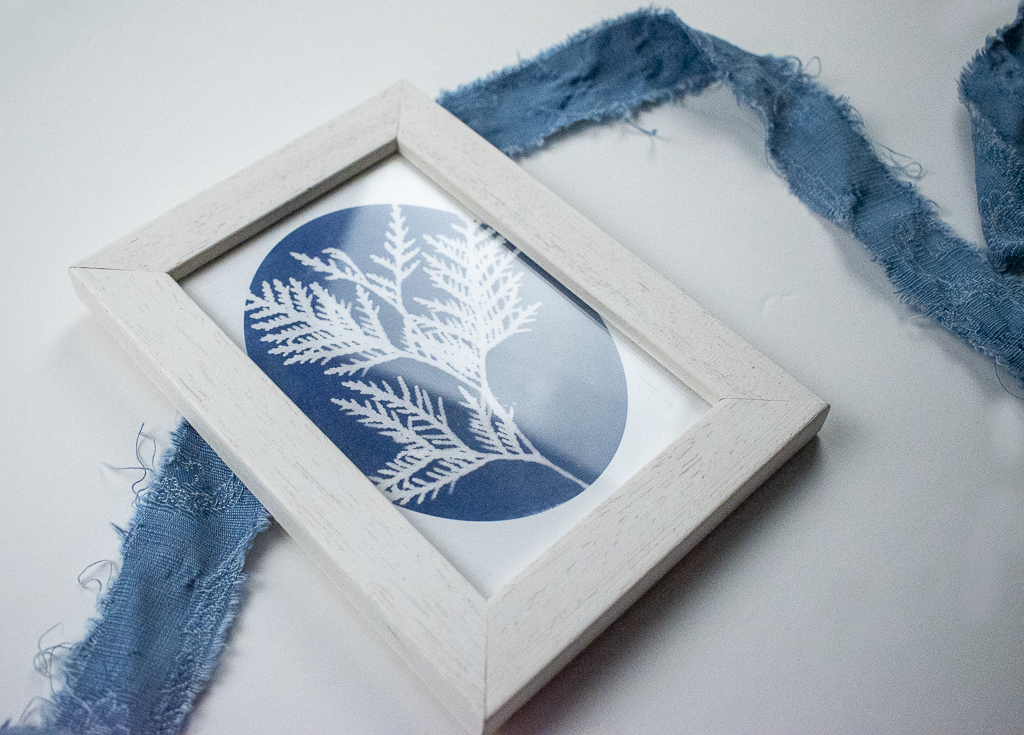
That is such a lovely instinct, and it tells me something about you: you are someone who values things that are made with care, and you want to honour that. The good news is that caring for a cyanotype is not complicated. A few simple habits will protect your artwork for years and even decades to come.
Here is everything you need to know.
Understanding What a Cyanotype Is Made Of
Before we talk about care, it helps to understand what you are working with.
A cyanotype is a light-sensitive print made on paper using a chemical process and real sunlight. The deep Prussian blue colour comes from the iron compounds that form during the exposure process. The print is made on watercolour paper or fine art paper, which gives it a beautiful texture and weight.
Because the cyanotype process is light-based, light is also the thing you need to be most thoughtful about when displaying and storing your piece long-term. More on that below.
Framing Your Cyanotype
Framing is the single most important thing you can do to protect a cyanotype over time. A good frame keeps the paper flat, protects it from dust and handling, and — if you choose the right materials — guards against the environmental factors that cause paper to yellow and deteriorate.
Here is what to look for when choosing a frame for your cyanotype:
Use UV-protective glass or acrylic glazing if you can. This is especially important if your artwork will be displayed in a room with a lot of natural light. UV-protective glazing filters out the wavelengths of light that cause fading and paper yellowing, and it makes a meaningful difference over the years.
Choose acid-free matting and backing. Acidic materials cause paper to yellow and deteriorate over time. Acid-free mat board and backing board are widely available and are the standard for archival framing. If you are having your cyanotype professionally framed, ask specifically for acid-free materials.
Make sure the print is not touching the glass directly. A mat board between the print and the glass keeps them separated, which prevents condensation from forming on the surface of the print and allows the paper to breathe slightly.
If you are looking for frame recommendations at a range of price points, I have a blog post on the smallest size picture frames that includes some of my favourite options from Amazon and IKEA — I will link it here.
Where to Hang Your Cyanotype
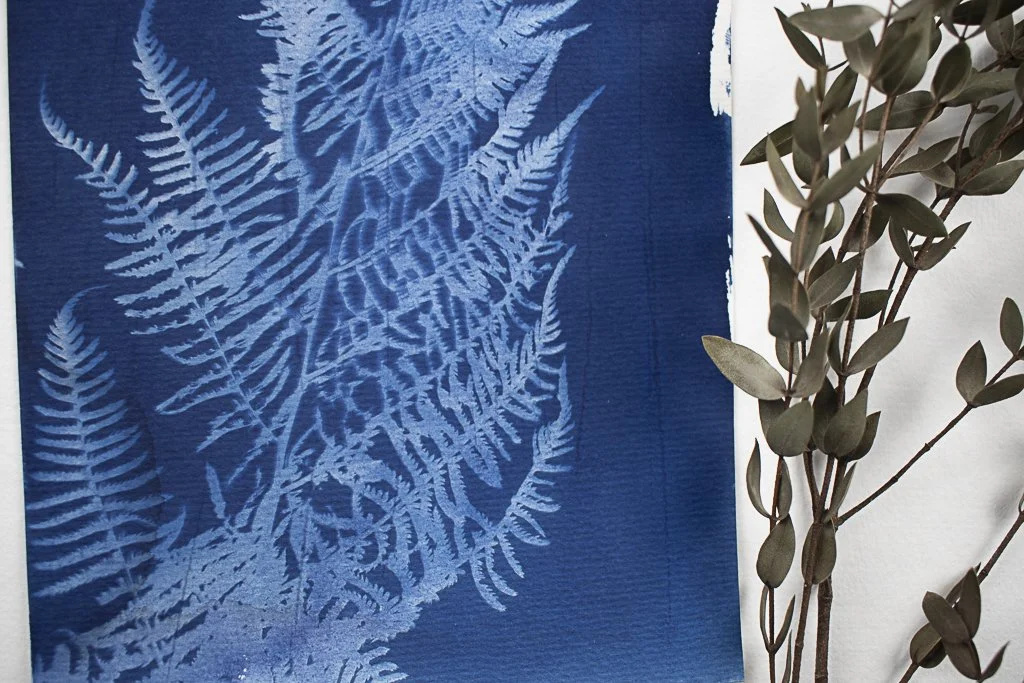
The deep blue of a cyanotype is sensitive to prolonged, direct sunlight. Over time, strong UV exposure can cause the print to fade — the blue will lighten, and the contrast between the botanical silhouette and the background will diminish.
This does not mean your cyanotype cannot be in a bright room. It means being thoughtful about placement.
Avoid hanging your cyanotype in direct sunlight — directly opposite a south-facing window, for example, where sunlight will fall on the print for several hours each day. Instead, look for a wall that receives indirect or diffused natural light. A north-facing wall, a spot beside rather than opposite a window, or a room with filtered light through curtains or blinds will all be much kinder to your artwork over time.
Indoor spaces without direct sun exposure are ideal — a dining room, a hallway, a bedroom wall away from the window, or a cosy reading corner. These are all beautiful homes for a cyanotype.
Artificial lighting is generally far gentler on artwork than direct sunlight and does not pose the same fading risk in normal household use.
Humidity and Temperature
Paper is sensitive to extremes of humidity and temperature, and cyanotypes are no exception.
Avoid hanging your artwork in rooms with high humidity — bathrooms, laundry rooms, or spaces directly adjacent to cooking surfaces are not ideal environments for paper art. Excess moisture can cause paper to warp, buckle, or develop mould over time.
Equally, avoid very dry environments with large temperature swings, such as directly above a heat vent or radiator. The repeated expansion and contraction of the paper in fluctuating temperatures is hard on any work on paper over the long term.
A living room, bedroom, hallway, or office — rooms with relatively stable temperature and normal household humidity — are all excellent environments for displaying your cyanotype.
Handling Your Cyanotype
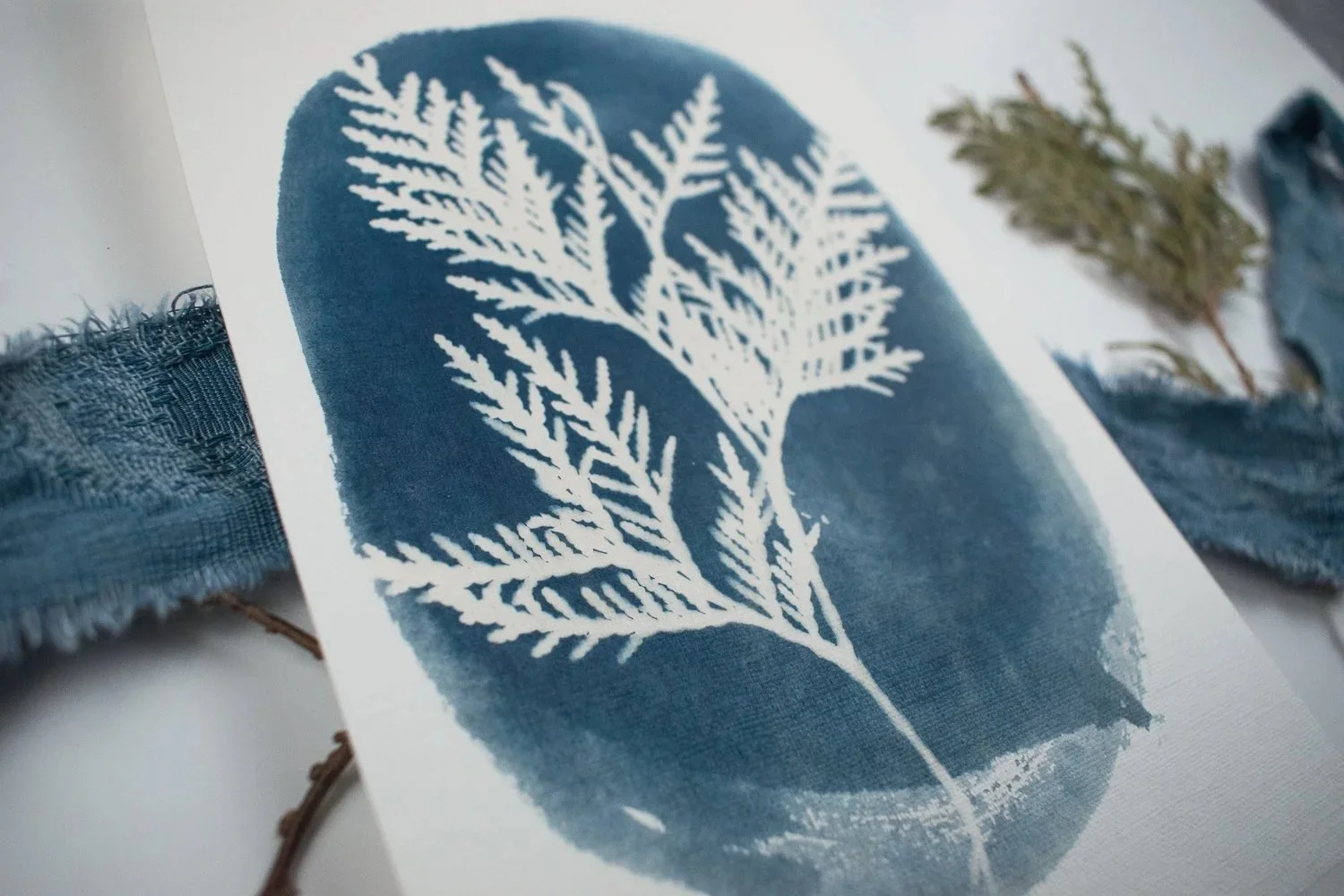
If you ever need to handle an unframed cyanotype — when moving, reframing, or simply looking at it closely — a few habits will protect the print.
Always handle the print by its edges, using both hands. Oils from fingertips can transfer to the surface of the paper and leave marks over time. If you are handling the print frequently, clean cotton gloves are a good idea.
Never fold or roll a cyanotype print. The paper has memory and will retain any creases permanently.
If your unframed print needs to be stored for any period of time, keep it flat, interleaved with acid-free tissue paper, and stored in a cool, dry, dark environment. A flat drawer, a portfolio box, or a clean, dry box away from light are all good options.
What to Do If Your Cyanotype Gets Wet
Because cyanotypes are made using a water-rinse process, the paper itself has been through water — so a small amount of moisture is not the end of the world. However, if your framed cyanotype gets wet — from a leak, condensation, or an accident — act quickly.
Remove the print from the frame as soon as possible and lay it flat on a clean, dry surface. Allow it to dry naturally, away from direct heat or sunlight. Do not try to speed the drying process with a hairdryer, as the heat can damage the paper fibres and cause warping.
If the print has been in contact with dirty water or has developed any mould, consult a professional paper conservator rather than attempting to clean it yourself.
A Note on the Cyanotype's Natural Behaviour
One thing worth knowing: cyanotype prints can temporarily fade if kept in the dark for extended periods, and then recover their colour when re-exposed to light. This is a natural characteristic of the process and is not a sign of damage. If you notice your cyanotype looking slightly less vibrant after being in storage, a little exposure to indirect light will usually bring the colour back.
This natural responsiveness to light is part of what makes cyanotype such a living, breathing art form.
Caring for Something Made with Care
A cyanotype is not a mass-produced print. It is a handmade, one-of-a-kind artwork made using real plants, real sunlight, and a process that has barely changed in nearly two hundred years. When you care for it well, it will reward you for a very long time.
I hope this guide gives you everything you need to display and protect your piece with confidence. If you have any questions about framing, placement, or caring for a specific piece you have purchased or are considering, please do not hesitate to reach out through the contact form below. I am always happy to help.
Related Articles:
What Is a Cyanotype? The Ancient Art Process Behind Your Favourite Blue Prints