A gallery wall is one of the most impactful ways to personalise your space and showcase artwork you love. Whether you’re displaying original art, family photos, or a mix of both, learning how to plan a gallery wall will help you create a layout that feels balanced, intentional, and visually appealing.
How To Plan A Gallery Wall
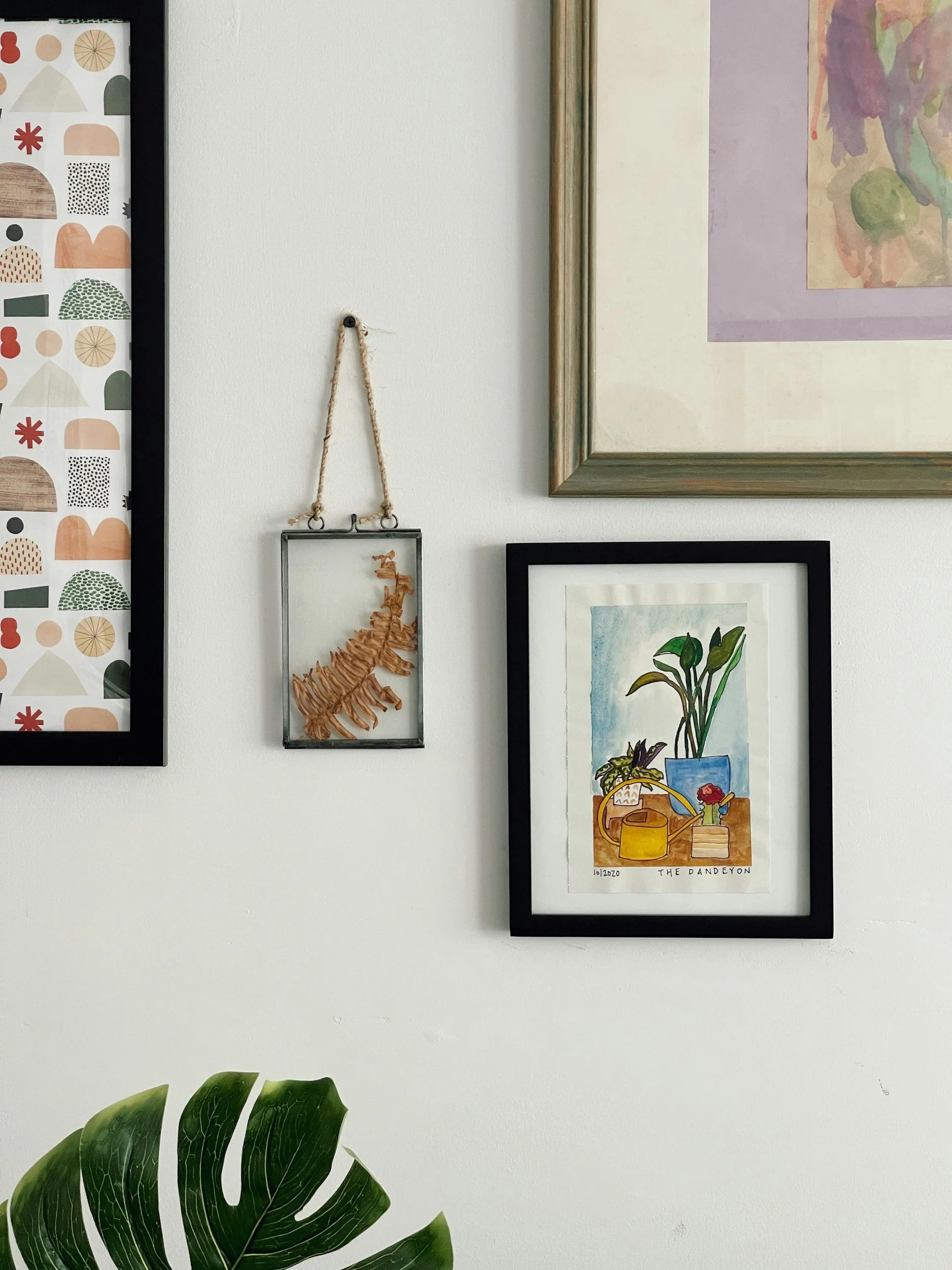
A Simple Guide For Creating A Cohesive Display
Start With Your Purpose And Space
Before choosing frames or artwork, think about where your gallery wall will go and what you want it to feel like.
Ask yourself:
Is this wall a focal point (like above a sofa or bed)?
Do you want it to feel calm and minimal or bold and eclectic?
Will you include only art, or mix in photos and objects?
Measure your wall space so you know the boundaries you’re working within. This helps avoid layouts that feel too cramped or too sparse.
Choose A Cohesive Theme Or Colour Palette
A strong gallery wall usually has something tying it all together.
You can create cohesion through:
A consistent colour palette (neutrals, black and white, or soft pastels)
A shared theme (nature, travel, abstract art)
Similar materials (all photography, all paintings, or a mix with intention)
If you’re using original artwork, think about how the tones and textures relate to each other. You don’t need everything to match—but it should feel connected.
Select Your Frames And Sizes
Frames play a big role in the overall look.
Options include:
Matching frames for a clean, modern feel
Mixed frames (wood, black, gold) for a collected, layered look
Matting to give artwork space and elevate the presentation
Use a mix of sizes for visual interest. A common approach is combining a few larger anchor pieces with smaller works around them.
Check this post for common frame sizes
Plan Your Layout Before Hanging
This is one of the most important steps when learning how to plan a gallery wall.
Try one of these methods:
Lay everything out on the floor first
Cut paper templates to match your frames and tape them on the wall
Use painter’s tape to mark spacing and edges
Start with your largest piece slightly off-centre, then build around it. Keep spacing consistent—typically 2–3 inches between frames works well.
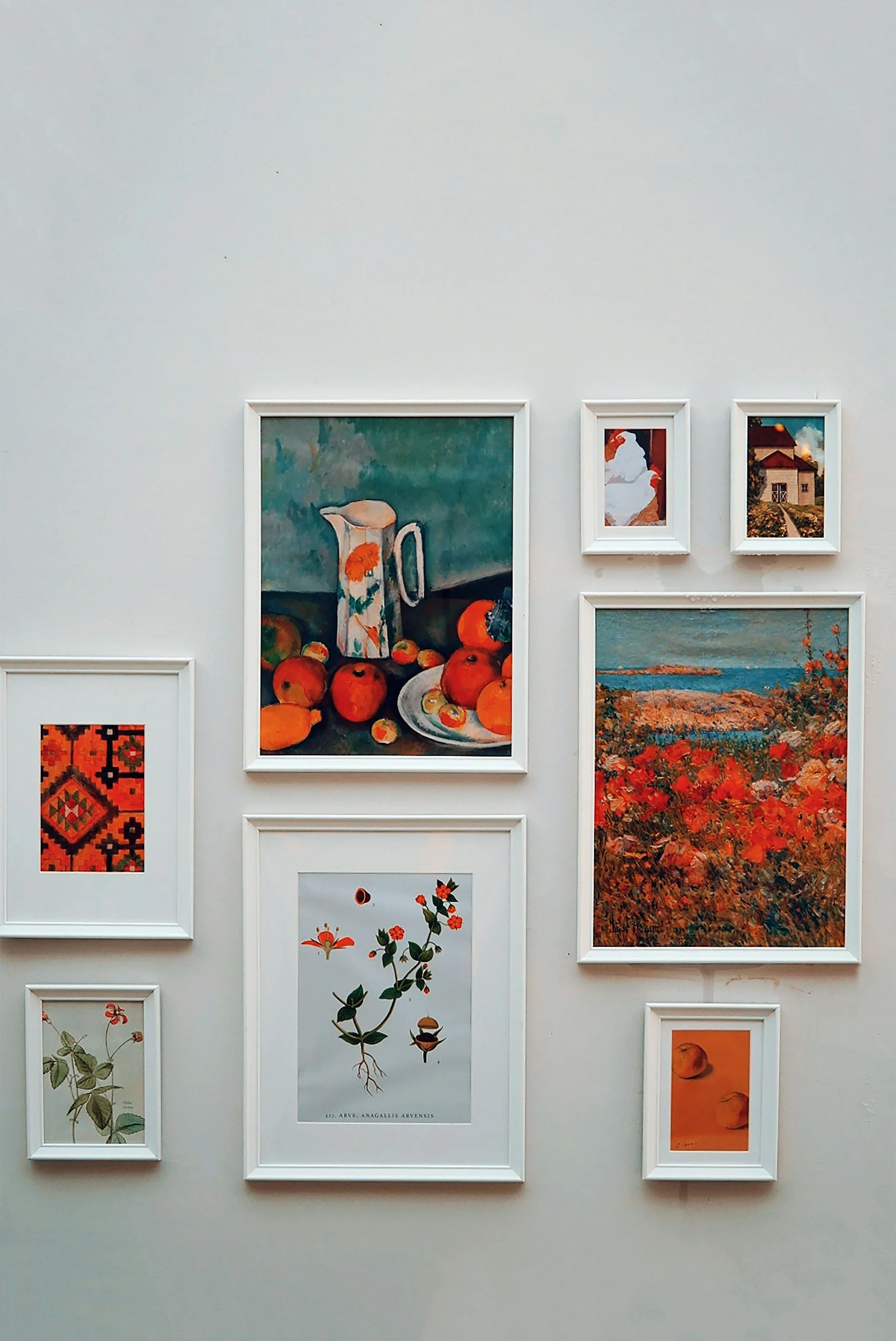
Consider Balance And Visual Flow
A good gallery wall feels balanced, even if it’s not perfectly symmetrical.
Tips to keep in mind:
Distribute colours and sizes evenly across the layout
Avoid clustering all large or dark pieces in one area
Step back frequently to see how it looks as a whole
Think of your wall as one complete composition rather than separate pieces.
Hang At The Right Height
A common mistake is hanging everything too high.
As a general rule:
The centre of your gallery wall should be around eye level (about 57–60 inches from the floor)
If hanging above furniture, leave about 6–10 inches of space between the furniture and the bottom frame
This helps the gallery wall feel connected to the room rather than floating above it.
Mix In Personal And Meaningful Pieces
The most beautiful gallery walls tell a story.
Consider including:
Your child’s art
Travel photos
Handmade or textile pieces
This adds personality and makes your wall feel unique to your home.
Take Your Time And Adjust
You don’t have to get it perfect on the first try.
Live with your gallery wall for a few days and make small adjustments if needed. Sometimes shifting one frame slightly can make everything feel more balanced.
Conclusion:
Learning how to plan a gallery wall is about combining creativity with a bit of structure. With thoughtful planning, a cohesive colour palette, and a balanced layout, you can create a display that transforms your space and showcases what matters most to you.
A well-designed gallery wall doesn’t just decorate a room—it tells a story, reflects your style, and brings your home to life.